
How to Read an Elevator Code Report (And What to Do Next)
- By VE
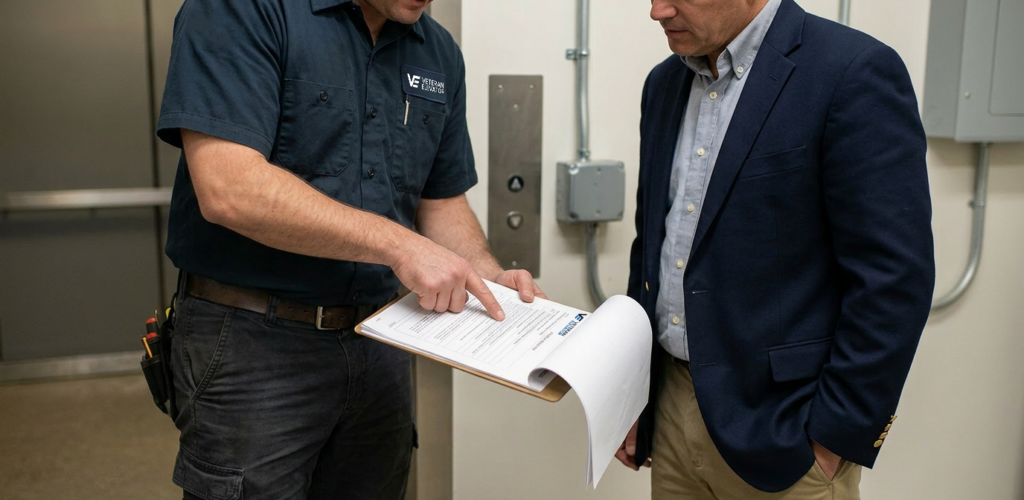
Receiving an elevator inspection report can be intimidating. Most reports contain technical language, code references, and deficiencies that aren’t always easy for building owners and property managers to understand.
The good news? You don’t have to figure it out alone.
At Veteran Elevator, we’re happy to help review inspection reports and explain the findings, even if we’re not your current elevator provider.
First Things First: Send the Report to Your Elevator Company
One of the most common misconceptions is that the elevator company automatically receives inspection reports.
In many cases, the report is sent to the permit holder, property manager, or building owner, not the elevator contractor.
Once you receive the report:
- Forward it to your elevator service provider.
- Review the findings together.
- Determine which items require corrective action.
- Establish who is responsible for completing each item.
If you have questions, our team is always available to help explain the report and discuss your options. Simply contact us at 253-433-0399
What Is an Elevator Code Report?
An elevator code report documents deficiencies identified during an inspection or test.
Inspectors generally do not make recommendations for repairs or modernization. Their role is to identify deficiencies and reference the applicable code sections.
Common findings may include:
- Past due shunt trip or smoke detector testing
- Annual or five-year testing deficiencies
- Fire recall issues
- Missing signage
- Emergency phone deficiencies
- Inability to complete testing because access to hoistway devices was unavailable
Many items are straightforward and can be resolved quickly once they are identified.
Who Is Responsible?
Ultimately, the building owner or permit holder is responsible for communicating with the Authority Having Jurisdiction (AHJ) and ensuring deficiencies are corrected.
Your elevator contractor can help:
- Explain the report
- Prioritize corrective actions
- Coordinate required repairs
- Assist with testing and documentation
- Help prepare for reinspection
Our goal is to help owners understand the report , not create unnecessary concern.
Have Questions About Your Elevator Report?
Understanding an elevator code report shouldn’t be complicated.
Whether you’re an existing customer or simply have questions about a recent inspection, Veteran Elevator is happy to help explain the findings and walk you through the next steps.
No pressure. No scare tactics. Just reliable, honest, and transparent guidance.
Received an inspection report? Contact Veteran Elevator today and let our team help you understand what it means and what actions, if any, are required.
Helpful Washington State Resources
Washington State Elevator Inspectors
Find your local inspector and contact information:
L&I Elevator Inspectors and Staff
Elevator Inspection Lookup
Search inspection records and historical information:
Elevator Lookup
https://fortress.wa.gov/lni/bii/Elevator/
Conveyance Management Portal
Access permit information and portal training resources:
Conveyance Management Portal
https://www.lni.wa.gov/licensing-permits/elevators/conveyance-management-portal
Property Manager and Building Owner Forms
Washington State forms and resources for owners and property managers:
Elevator Building Owners & Property Managers
https://lni.wa.gov/licensing-permits/elevators/building-owners-property-managers/