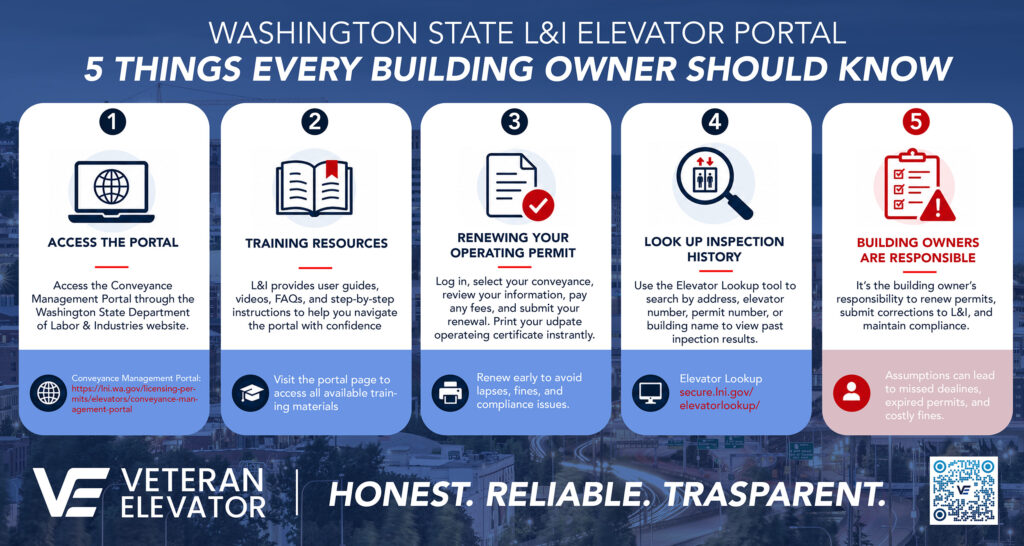
Washington L&I Elevator Portal: 5 Things Every Building Owner Should Know
- By VE
How to Use the Washington L&I Conveyance Management Portal
If you own or manage a commercial building in Washington State, you’ve probably heard about the Washington State Department of Labor & Industries (L&I) Conveyance Management Portal. Whether you’re renewing an operating permit, checking inspection records, or applying for a new permit, this portal has become the central hub for managing elevators and other conveyances across the state.
For many building owners, however, knowing where to start can be confusing. Below is a quick guide to the portal, along with a few resources that can make navigating the system much easier.
What is the Conveyance Management Portal?
The Conveyance Management Portal (CMP) is L&I’s online system for managing elevators, escalators, wheelchair lifts, dumbwaiters, and other conveyances. Instead of submitting paperwork through multiple channels, owners, contractors, and inspectors can now access permits, inspection records, and operating certificates in one place.
The portal allows users to apply for permits, renew operating certificates, view conveyance records, monitor permit activity, and print important documentation whenever it’s needed. If you’re responsible for maintaining an elevator, it’s a tool you’ll likely use every year.
Where do I access the portal?
The portal is available directly through the Washington State Department of Labor & Industries website. If you’ve already created a My L&I account, you can sign in using your existing credentials. New users can create an account in just a few minutes before accessing their elevator records.
Conveyance Management Portal:
https://lni.wa.gov/licensing-permits/elevators/conveyance-management-portal
If this is your first time using the system, don’t worry—L&I provides helpful guides and support for new users.
Training resources
Like any new online system, there’s a bit of a learning curve. Fortunately, L&I offers several training resources to help building owners, contractors, and property managers become familiar with the portal.
Their training materials include step-by-step user guides, instructional videos, frequently asked questions, and walkthroughs for common tasks such as permit applications and operating certificate renewals. Spending a few minutes reviewing these resources can save a lot of frustration later.
Training materials are available directly from the Conveyance Management Portal page.
Renewing your operating permit
Every elevator operating in Washington State is required to maintain a current Annual Operating Certificate. Renewing your certificate through the portal is a relatively simple process and can usually be completed in just a few minutes.
After logging into the portal, you’ll select your conveyance, review the information on file, pay any applicable renewal fees, and submit your renewal request. Once it’s been processed, you’ll be able to print your updated operating certificate directly from your account.
One recommendation we always give our customers is not to wait until the last minute. Renewing early helps avoid unnecessary delays and ensures your elevator remains in compliance.
An Important Responsibility Every Building Owner Should Know
One of the biggest misconceptions we encounter is who is responsible for managing information in the L&I Conveyance Management Portal.
While your elevator service provider can perform repairs, complete maintenance, conduct required testing, and help explain inspection reports, the building owner (or their designated property manager) is ultimately responsible for maintaining compliance with Washington State requirements.
This includes:
- Renewing your Annual Operating Certificate
- Submitting completed corrections to L&I after inspection deficiencies have been addressed
- Maintaining current ownership and permit information
- Ensuring required documentation is submitted on time
At Veteran Elevator, our goal is to help you navigate compliance seamlessly. We often find that building owners are surprised to learn that state regulations require them—not their service provider—to directly manage operating permits and submit corrections to L&I.
Because these administrative tasks fall solely on the building owner, it is easy for important deadlines to get missed in the shuffle of daily operations. When that happens, it can lead to unnecessary fines and compliance delays. We want to ensure your property stays fully protected, which is why we proactively highlight these requirements so you never face an unexpected penalty.
Understanding your responsibilities—and staying on top of them through the Conveyance Management Portal—is one of the easiest ways to keep your elevator compliant and avoid unnecessary headaches.
Looking up inspection records
One of the most useful features of the L&I system is the Elevator Lookup tool. This allows owners and property managers to quickly review inspection history for a specific elevator.
You can search using several different pieces of information, including the building address, elevator number, permit number, or building name. Having access to this history makes it much easier to track previous inspections, understand recurring issues, and verify compliance records.
The inspection lookup tool can be found here:
https://secure.lni.wa.gov/elevatorlookup/
Need help understanding your inspection?
Receiving an inspection report doesn’t always mean there’s a serious problem, but it can leave building owners with questions about what needs to be addressed, how quickly repairs should be completed, or whether larger upgrades should be considered.
At Veteran Elevator, we regularly help property managers and building owners interpret inspection findings, prioritize repairs, and develop practical plans for maintaining compliance. Whether it’s coordinating corrective work, assisting with permit requirements, or planning for a future modernization, our goal is to make the process straightforward and stress-free.
While we don’t submit operating permit renewals or correction documentation on behalf of building owners, we’re always happy to answer questions, explain what an inspection report means, and help you understand the next steps.
If you’ve recently received an inspection report or have questions about the Washington L&I Conveyance Management Portal, our team is here to help.